
If you’ve been struggling with bite issues and wondering whether clear aligners might be the solution, you’re not alone. Millions of adults seek alternatives to traditional metal braces for correcting dental misalignments. Invisalign can effectively treat mild to moderate overbites and underbites by gradually shifting teeth into proper alignment, though severe skeletal cases may require additional orthodontic interventions. The success of treatment depends on the specific nature and severity of your bite problem, making a professional evaluation essential.
Understanding how these innovative clear aligners work and whether they’re right for your situation can help you make an informed decision about your orthodontic care.
Before exploring treatment options, it’s important to understand what these conditions actually are.
Both conditions can result from genetic factors, childhood habits like thumb-sucking, or developmental issues with jaw growth.
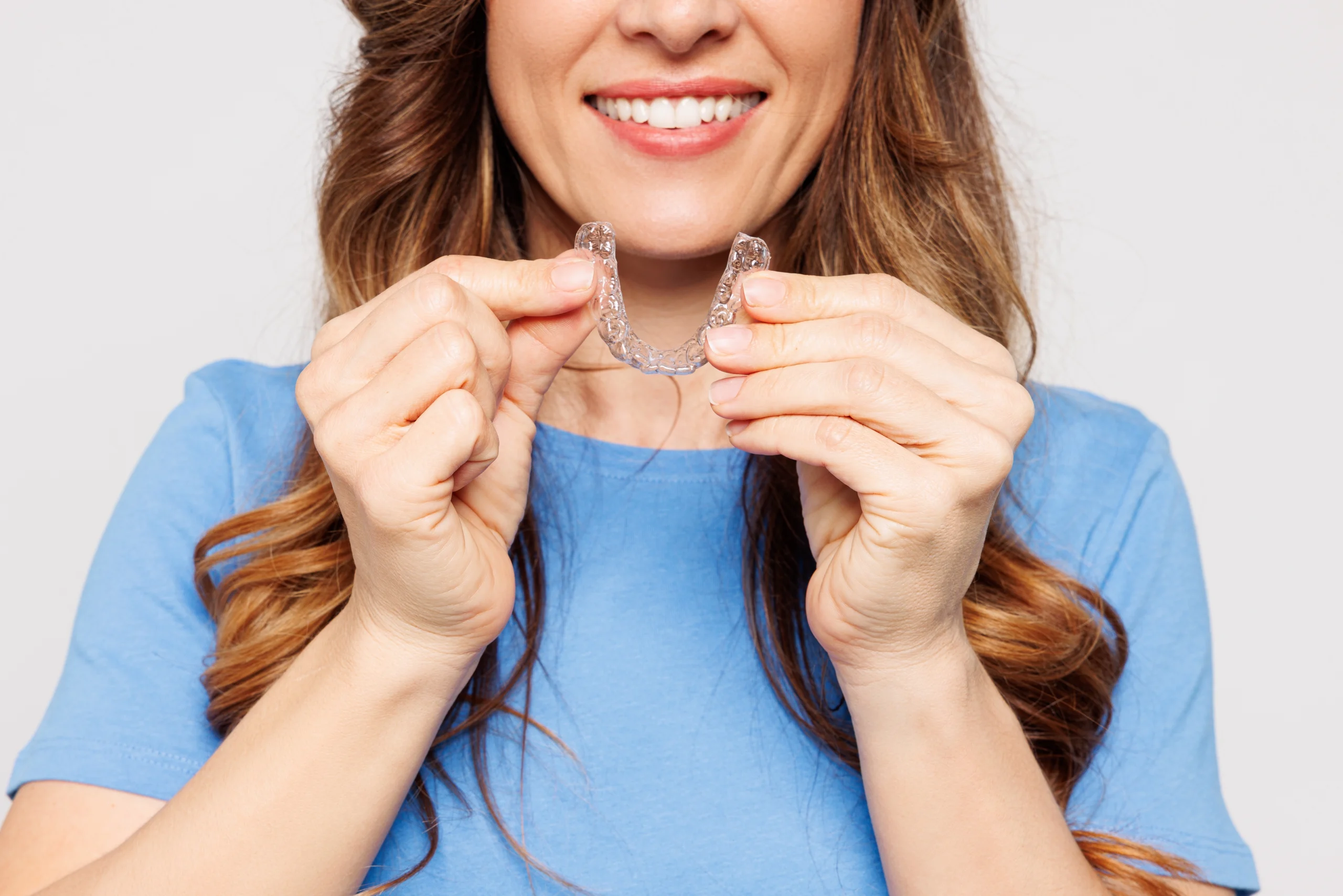
Invisalign uses a series of custom-made, clear plastic aligners that fit snugly over your teeth. Each set of removable aligners applies gentle, controlled pressure to gradually move your teeth into their ideal positions. You’ll typically wear each set for 1-2 weeks before progressing to the next in the series.
For bite corrections specifically, Invisalign aligners can rotate teeth, shift them horizontally or vertically, and even help adjust the positioning of your jaw over time. The treatment plan is mapped out using advanced 3D imaging technology, allowing your orthodontist to predict and plan every tooth movement from start to finish.
The precision of this digital planning makes it possible to address complex bite issues that once required traditional braces. However, the key to success lies in wearing your aligners for 20-22 hours per day and following your orthodontist’s instructions carefully.
Yes, Invisalign can successfully correct many overbite cases, particularly those classified as mild to moderate. The aligners work by gradually repositioning the upper and lower teeth to reduce overlap. In some cases, your orthodontist may use small, tooth-colored attachments bonded to your teeth to help the aligners grip more effectively and facilitate specific movements.
For overbite correction, Invisalign may also incorporate precision wings or bite ramps – special features built into certain aligners that help guide your bite into proper alignment. These features encourage your jaw to rest in a more optimal position while the teeth are being straightened.
The timeline for correcting an overbite with Invisalign varies depending on severity. Mild cases may improve within 6-12 months, while more significant overbites may require 18-24 months of treatment. Regular check-ins with your orthodontist every 6-8 weeks ensure your treatment stays on track.
Underbites present a more complex challenge because they often involve skeletal components – meaning the issue stems from the jaw bones themselves rather than just tooth positioning. Invisalign can effectively treat mild to moderate underbites where the problem is primarily dental in nature.
The treatment approach for underbites typically involves moving the lower teeth back and the upper teeth forward to create proper overlap. Elastics, which are small rubber bands worn between the upper and lower aligners, are commonly used to help shift the bite relationship. These elastics work in conjunction with the aligners to apply targeted pressure on the jaw.
Success rates for underbite correction with Invisalign are generally good for cases where the skeletal discrepancy isn’t too severe. However, transparency from your orthodontist about realistic expectations is crucial during your initial consultation.
For severe overbites or underbites with significant skeletal components, jaw surgery may be required in addition to or instead of orthodontic treatment. This is particularly true for underbites caused by an overgrown lower jaw or undergrown upper jaw.
Orthognathic surgery, as it’s formally called, involves repositioning the jaw bones to create proper alignment. In some cases, Invisalign or traditional braces may be used before and after surgery to optimize tooth positioning. This combined approach is often referred to as surgical orthodontics.
Your orthodontist will work closely with an oral surgeon if surgical intervention is deemed necessary. While this may sound daunting, modern surgical techniques have made these procedures safer and more predictable than ever, with many patients experiencing life-changing improvements in both function and appearance.
Determining whether you’re suitable for Invisalign bite correction requires a comprehensive evaluation by an experienced orthodontist. Good candidates typically have mild to moderate bite issues, healthy gums and teeth, and the discipline to wear their aligners as directed.
You might be an ideal candidate if your bite problem is primarily related to tooth positioning rather than skeletal jaw discrepancies. Age is rarely a limiting factor – Invisalign can work effectively for both teenagers and adults, as long as all permanent teeth have erupted and bone growth is complete.
However, certain factors might make Invisalign less suitable. If you have severe crowding, major skeletal discrepancies, or missing teeth that affect treatment planning, alternative options might yield better results. Lifestyle factors matter too – if you’re concerned about the commitment required to wear aligners most of the day, traditional braces that can’t be removed might be more appropriate.
The best way to determine whether Invisalign can fix your overbite or underbite is to schedule a consultation with a certified Invisalign provider. They’ll assess your specific situation, take diagnostic records, and present you with a customized treatment plan.
Remember that successful orthodontic treatment isn’t just about aesthetics – it’s about improving your oral health, bite function, and overall quality of life. Whether you choose Invisalign or another treatment method, addressing bite issues can prevent future dental problems and give you the confident smile you deserve.
Many people assume that the need to fix overbites is purely cosmetic, but malocclusion – the technical term for misaligned bites – can lead to serious health complications if left untreated. A slight overbite is actually normal, but excessive overlap or underbites can affect chewing efficiency, making eating uncomfortable and potentially leading to digestive issues. These bite problems can also cause speech problems, contribute to tooth decay due to difficulty cleaning certain areas, and create jaw alignment issues that result in chronic headaches or TMJ disorders. Unlike traditional braces with metal brackets that many adults feel self-conscious about wearing, Invisalign offers a virtually invisible solution that fits seamlessly into professional and social settings, making the treatment process more appealing for image-conscious patients.
The treatment time and complexity of Invisalign treatment for overbite or underbite correction vary significantly based on severity. While a dentist can provide an initial assessment, an orthodontist will create your comprehensive treatment plan. Severe cases with significant skeletal involvement may still require more intensive interventions, and complex cases sometimes need supplementary tools like elastics or attachments to achieve better alignment.
However, for the majority of patients with mild to moderate bite issues, Invisalign can successfully improve jaw alignment without the dietary restrictions, discomfort, and aesthetic concerns associated with traditional orthodontic appliances, making it an increasingly popular choice for both functional and cosmetic dental correction.